| AB | 84 |
|---|---|
| AVG | .274 |
| OBP | .337 |
| SLG | .429 |
| HR | 4 |
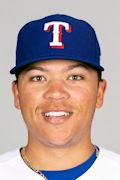
- Full name Dustin Alexander Harris
- Born 07/08/1999 in Tampa, FL
- Profile Ht.: 6'3" / Wt.: 185 / Bats: L / Throws: R
- School St. Petersburg JC
- Drafted in the 11th round (344th overall) by the Oakland Athletics in 2019 (signed for $250,000).
Top Rankings
Organization Prospect Rankings
-
BA Grade: 50/High
Track Record: Harris was drafted by the Athletics out of junior college in 2019, then dealt to the Rangers in 2020 as part of a two-player package that sent Mike Minor to Oakland. In 2021, Harris made that deal look like a heist by hitting .327/.401/.542 with 20 home runs and winning the organization’s minor league player of the year award. He earned a berth in the 2022 Futures Game and collected two hits and a stolen base. A sprained left wrist in August ended his season. Harris split 2023 between Double-A Frisco and Triple-A Round Rock, finishing as one of eight minor leaguers with 20 or more doubles, 80 or more walks and 40 or more stolen bases.
Scouting Report: Harris’ season flipped when he was promoted to Triple-A. Part of that was because the automated ball-strike system plays into hitters’ hands at the top of the zone, which is an area of weakness for Harris. Opposing hitters noticed that Harris was having trouble keeping his upper and lower halves connected during his swing. To remedy this, he began starting his stride earlier, which helped. He also cleaned up some of the excess movement in his swing to help get a cleaner, more efficient path to the ball. Harris’ exit velocities were subpar in 2023, and the Rangers would like him to work on putting on more weight to get more oomph behind the ball. Harris has gotten experience in left field but he’s likely going to wind up at first base, where he’ll compete with Justin Foscue for a potential roster spot. Despite 41 stolen bases, Harris is more of a skilled baserunner than he is a true burner. His speed is roughly average.
The Future: Harris will return to Triple-A in 2024 to try to continue his strong finish from 2023. If he can show more power, he’ll have a shot to make his big league debut.
Scouting Grades Hit: 50 | Power: 50 | Run: 50 | Field: 45 | Arm: 45 -
BA Grade/Risk: 50/High
Track Record: Harris was drafted by the Athletics in the 11th round in 2019 and made it to their short-season affiliate in the New York-Penn League in his first pro season. A year later, with the minor league season lost to the pandemic, Oakland traded him to Texas as part of the two-player package used to obtain Mike Minor. Harris crushed two Class A levels in 2021 and won the Rangers' minor league player of the year award. He had an up-and-down 2022 season, which ended with a sprained right wrist on Aug. 10.
Scouting Report: When the minor leagues began enforcing the new pitch clock rules, Harris suffered. He was forced to speed up his pre-pitch routine and consequently got out of his rhythm. The result was a difficult May before a strong second half of the season. He also got a bit out of whack with his mechanics, sometimes letting the ball travel too deep and hooking hittable pitches foul to his pull side. Once he tweaked his mechanics and bat path, he started looking more like himself. Harris' under-the-hood numbers were quite good, including a high rate of hitting balls at an optimal mix of exit velocity and launch angle, as well as solid rates of chase and in-zone miss. Drafted as a third baseman and primarily a first baseman as a pro, Harris' transition to the outfield was a bit of a bumpy ride. He has average speed and gets decent jumps on balls, but early on he looked tentative in left field simply trying to catch the ball. Outside evaluators believe he won't be much more than fringe-average.
The Future: Harris was added to the Rangers' 40-man roster after the season and should head to Triple-A Round Rock to begin 2023. He'll be a bat-first player no matter where he lands on the diamond, but a successful transition to the outfield would give him a lot more value.
Scouting Grades: Hitting: 55. Power: 55. Speed: 45. Fielding: 45. Arm: 45 -
Track Record: Harris was Oakland’s 11th-round selection in the 2019 draft out of St. Petersburg (Fla.) JC. He made it to short-season ball with the A’s before being dealt to Texas as one of two players to be named later in the 2020 deadline deal for Mike Minor. Harris surprised evaluators both inside and outside the Rangers organization in 2021 with his combination of plus contact paired with above-average power, and he finished the year batting .327/.401/.532 across both Class A levels in a breakout campaign.
Scouting Report: Harris is as pure of a hitter as can be found in the Rangers organization. He was the only player in the minor leagues in 2021 with 20 or more doubles, home runs and stolen bases and fewer than 100 strikeouts. He accomplished those numbers thanks to a short, compact swing, an innate sense of barrel accuracy and an excellent knowledge of the strike zone. He hits the ball plenty hard, too, with a 90th percentile exit velocity of 101.7 mph. That figure is identical to fellow Top 10 prospect Josh Smith and just a tick below that of Evan Carter. Where Harris plays on defense is a bigger question. He’s not going to be a third baseman long term, which gives him a likely home of first base. At instructional league Harris worked some in left field, where some evaluators believe his athleticism will allow him to play.
The Future: After dominating the Class A levels, Harris will move to Double-A in 2022. If he can dominate there the way he did in 2021, he will rise to the majors quickly.
Minor League Top Prospects
-
Acquired from the Athletics as part of the trade for Mike Minor in 2020, Harris broke out in his new organization, standing out for his ability to make hard contact and barrel the ball consistently. Harris’ uptick in power that is most impressive. The 22-year-old corner infielder crushed 20 home runs in 110 games after hitting only one in 58 games in 2019. Harris stood out to league managers for his bat speed, baserunning ability (25 stolen bases in 27 attempts between the Class A levels), defense at first base and power production. Thanks to his sneaky athleticism, Harris could also handle an outfield corner if the Rangers decide to move him there.
Scouting Reports
-
BA Grade/Risk: 50/High
Track Record: Harris was drafted by the Athletics in the 11th round in 2019 and made it to their short-season affiliate in the New York-Penn League in his first pro season. A year later, with the minor league season lost to the pandemic, Oakland traded him to Texas as part of the two-player package used to obtain Mike Minor. Harris crushed two Class A levels in 2021 and won the Rangers' minor league player of the year award. He had an up-and-down 2022 season, which ended with a sprained right wrist on Aug. 10.
Scouting Report: When the minor leagues began enforcing the new pitch clock rules, Harris suffered. He was forced to speed up his pre-pitch routine and consequently got out of his rhythm. The result was a difficult May before a strong second half of the season. He also got a bit out of whack with his mechanics, sometimes letting the ball travel too deep and hooking hittable pitches foul to his pull side. Once he tweaked his mechanics and bat path, he started looking more like himself. Harris' under-the-hood numbers were quite good, including a high rate of hitting balls at an optimal mix of exit velocity and launch angle, as well as solid rates of chase and in-zone miss. Drafted as a third baseman and primarily a first baseman as a pro, Harris' transition to the outfield was a bit of a bumpy ride. He has average speed and gets decent jumps on balls, but early on he looked tentative in left field simply trying to catch the ball. Outside evaluators believe he won't be much more than fringe-average.
The Future: Harris was added to the Rangers' 40-man roster after the season and should head to Triple-A Round Rock to begin 2023. He'll be a bat-first player no matter where he lands on the diamond, but a successful transition to the outfield would give him a lot more value.
Scouting Grades: Hitting: 55. Power: 55. Speed: 45. Fielding: 45. Arm: 45 -
BA Grade/Risk: 50/High
Track Record: Harris was drafted by the Athletics in the 11th round in 2019 and made it to their short-season affiliate in the New York-Penn League in his first pro season. A year later, with the minor league season lost to the pandemic, Oakland traded him to Texas as part of the two-player package used to obtain Mike Minor. Harris crushed two Class A levels in 2021 and won the Rangers' minor league player of the year award. He had an up-and-down 2022 season, which ended with a sprained right wrist on Aug. 10.
Scouting Report: When the minor leagues began enforcing the new pitch clock rules, Harris suffered. He was forced to speed up his pre-pitch routine and consequently got out of his rhythm. The result was a difficult May before a strong second half of the season. He also got a bit out of whack with his mechanics, sometimes letting the ball travel too deep and hooking hittable pitches foul to his pull side. Once he tweaked his mechanics and bat path, he started looking more like himself. Harris' under-the-hood numbers were quite good, including a high rate of hitting balls at an optimal mix of exit velocity and launch angle, as well as solid rates of chase and in-zone miss. Drafted as a third baseman and primarily a first baseman as a pro, Harris' transition to the outfield was a bit of a bumpy ride. He has average speed and gets decent jumps on balls, but early on he looked tentative in left field simply trying to catch the ball. Outside evaluators believe he won't be much more than fringe-average.
The Future: Harris was added to the Rangers' 40-man roster after the season and should head to Triple-A Round Rock to begin 2023. He'll be a bat-first player no matter where he lands on the diamond, but a successful transition to the outfield would give him a lot more value.
Scouting Grades: Hitting: 55. Power: 55. Speed: 45. Fielding: 45. Arm: 45 -
BA Grade: 50/High
Track Record: Harris was Oakland's 11th-round selection in the 2019 draft out of St. Petersburg (Fla.) JC. He made it to short-season ball with the A's before being dealt to Texas in the middle of the 2020 season as part of a two-player package for Mike Minor. In 2021, Harris surprised evaluators both inside and outside the organization with his combination of plus contact paired with above-average power, and finished the year as one of the sport's biggest breakouts.
Scouting Report: Harris is as pure of a hitter as can be found in the Rangers organization. He was the only player in the minor leagues in 2021 with 20 or more doubles, home runs and stolen bases with fewer than 100 strikeouts. He accomplished those numbers thanks to a short, compact swing, an innate sense of barrel accuracy and an excellent knowledge of the strike zone. He hits the ball plenty hard, too, with a 90th percentile exit velocity of 101.7 mph. That figure is identical to fellow Top 10 prospect Josh Smith and just a tick below that of Evan Carter. Where Harris plays on defense is a bigger question. He's not going to be a third baseman long term, which gives him a likely home of first base. At instructional league Harris worked some in left field, where some evaluators believe his athleticism will allow him to play.
The Future: After dominating the Class A levels, Harris will move to Double-A in 2022. If he can dominate there the way he did in 2021, his stock will soar.
Scouting Grades: Hit: 60. Power: 55. Speed: 45. Fielding: 40. Arm: 45. -
Track Record: Harris was Oakland’s 11th-round selection in the 2019 draft out of St. Petersburg (Fla.) JC. He made it to short-season ball with the A’s before being dealt to Texas as one of two players to be named later in the 2020 deadline deal for Mike Minor. Harris surprised evaluators both inside and outside the Rangers organization in 2021 with his combination of plus contact paired with above-average power, and he finished the year batting .327/.401/.532 across both Class A levels in a breakout campaign.
Scouting Report: Harris is as pure of a hitter as can be found in the Rangers organization. He was the only player in the minor leagues in 2021 with 20 or more doubles, home runs and stolen bases and fewer than 100 strikeouts. He accomplished those numbers thanks to a short, compact swing, an innate sense of barrel accuracy and an excellent knowledge of the strike zone. He hits the ball plenty hard, too, with a 90th percentile exit velocity of 101.7 mph. That figure is identical to fellow Top 10 prospect Josh Smith and just a tick below that of Evan Carter. Where Harris plays on defense is a bigger question. He’s not going to be a third baseman long term, which gives him a likely home of first base. At instructional league Harris worked some in left field, where some evaluators believe his athleticism will allow him to play.
The Future: After dominating the Class A levels, Harris will move to Double-A in 2022. If he can dominate there the way he did in 2021, he will rise to the majors quickly.
-
Acquired from the Athletics as part of the trade for Mike Minor in 2020, Harris broke out in his new organization, standing out for his ability to make hard contact and barrel the ball consistently. Harris’ uptick in power that is most impressive. The 22-year-old corner infielder crushed 20 home runs in 110 games after hitting only one in 58 games in 2019. Harris stood out to league managers for his bat speed, baserunning ability (25 stolen bases in 27 attempts between the Class A levels), defense at first base and power production. Thanks to his sneaky athleticism, Harris could also handle an outfield corner if the Rangers decide to move him there. -
Harris was acquired as one half of the return from the A's in exchange for Mike Minor in 2020. He's surprised internal evaluators with his ability to consistently put the barrel on the ball and make hard contact. The team believes that gift, combined with his advanced approach and sound understanding of the strike zone will one day lead to power befitting of a first baseman.
Career Transactions
-
3B Dustin Harris assigned to Round Rock Express from Frisco RoughRiders.

-
Round Rock Express activated 3B Dustin Harris.
-
3B Dustin Harris assigned to Round Rock Express from Frisco RoughRiders.
-
3B Dustin Harris and assigned to Frisco RoughRiders from Round Rock Express.

-
Texas Rangers optioned 3B Dustin Harris to Round Rock Express.